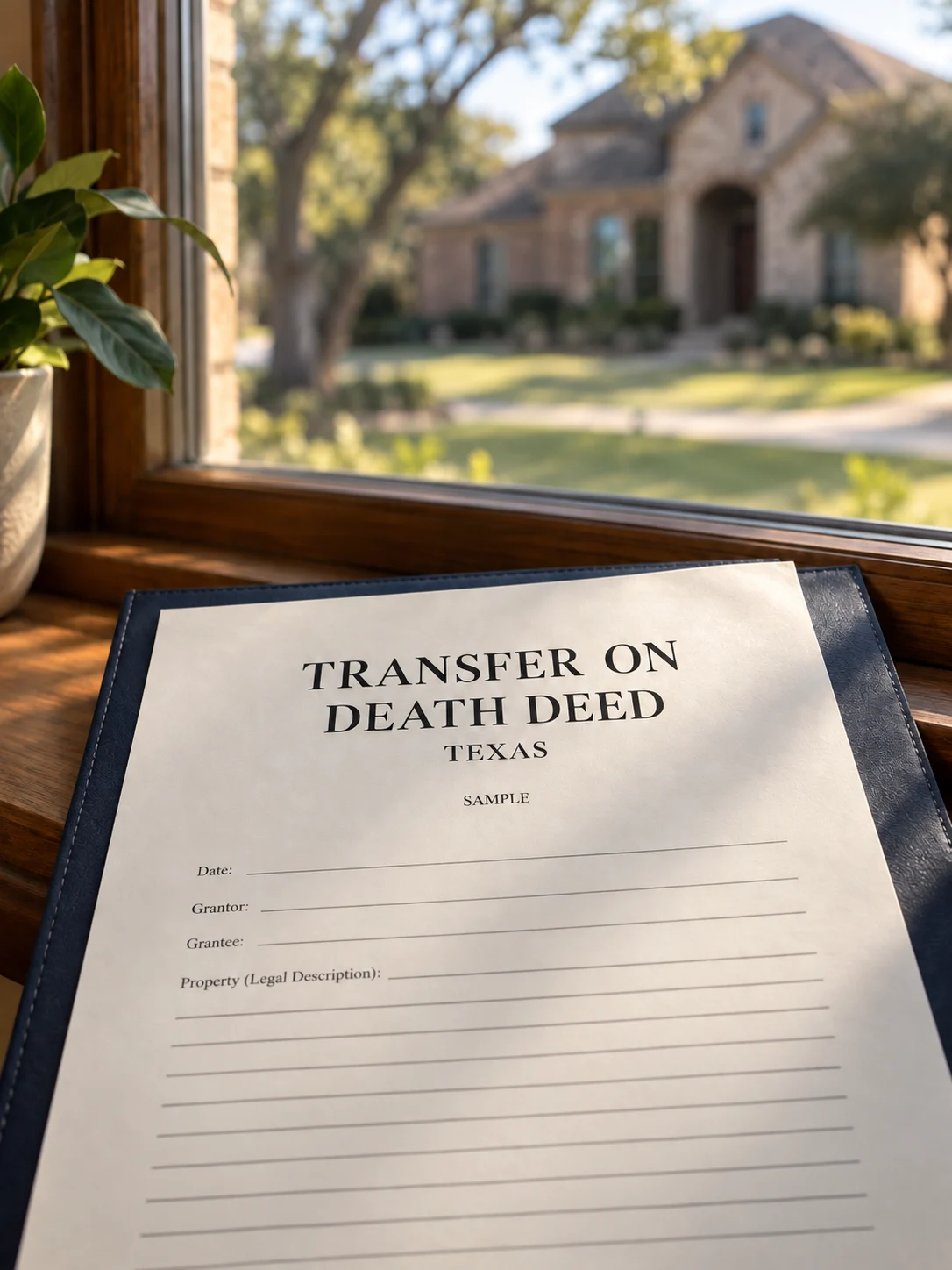
WG Title welcomes transfer on death deed closings. Our probate-experienced team looks at your deed, the title history and the path to closing.
Every closing is subject to title review, underwriting approval and satisfaction of the file’s requirements.
A home. A legacy. A way forward.
Texas probate attorney ownershipExperienced in inherited-property closingsServing properties across Texas
Why a title company may say no
A valid deed. A separate insurance decision.
“We won’t close it” does not necessarily mean “it isn’t legal.”
Title insurance covers certain ownership claims and the cost of defending them. A title company and its underwriter must assess that exposure before issuing a policy. A legally effective transfer can still need additional evidence or curative work.
Possible concerns include creditor claims, a disputed signature, competing ownership interests or missing records. A company may also have limited experience with the probate issues involved. The reason matters—and deserves a closer look.
WG Title is owned by Texas probate attorney Taylor Willingham. Our escrow officers work in an office alongside probate attorneys, with experience closing thousands of transactions involving probate.
We bring that experience to the questions behind your deed. We look for workable solutions, explain what is needed and coordinate with your attorney and our underwriter.
Upload a copy and tell us about the property and your timeline.
02
Get a clear next step
Our team reviews the file and identifies documents and underwriting questions.
03
Move toward closing
When the file meets the requirements, we coordinate your closing.
The law, in plain English
Texas recognizes transfer on death deeds.
Texas Estates Code Chapter 114 authorizes an owner to name a beneficiary for real property at death. The details of the deed—and what happened after it was signed—matter.
What makes one effective?
The owner has the capacity required to make a contract.
The deed meets recordable-deed formalities, identifies the property and beneficiary, and makes the transfer effective at death.
It is recorded in the proper county before the owner dies.
The deed remains effective and the interest is owned at death. Beneficiary-survival and other applicable rules must also be satisfied.
Existing liens and certain estate liabilities can follow the property. Section 114.106’s generally two-year deadline for certain liability proceedings is an underwriting concern, not a universal prohibition on selling. Each file needs its own review.
General Texas information; sources checked September 21, 2026. WG Title provides title and escrow services, not legal advice. WG Law is a separate, independently operated company and any relationship with it is governed by its own engagement.
When title and probate overlap
What if I need to probate the estate?
A Transfer on Death Deed addresses only the Texas real property it validly covers. Other assets, creditor issues, a disputed or ineffective deed, or the need for a court-appointed representative may still require probate. WG Title reviews the title and closing requirements; a Texas probate attorney determines the right court process.
Texas estates can follow different paths. The will, heirs, debts, disputes, property, and required authority all affect which option may fit.
Independent administration
An executor or administrator can handle most estate work without asking the court to approve each step.
Dependent administration
The court supervises the administration and generally approves major actions as the estate moves forward.
Muniment of title
A qualifying will may be admitted as evidence of title without opening a full estate administration.
Small estate affidavit
Some limited intestate estates may use a statutory affidavit when all requirements are satisfied.
Affidavit of heirship
This records family-history evidence that may help with certain real-property title issues; it is not a court administration.
Determination of heirship
A probate court can formally identify the heirs when there is no valid will or a judicial heirship finding is needed.
Submitting a deed requests a title and closing review. It does not create an attorney-client relationship, provide a legal opinion or guarantee a closing date. You may continue working with your own attorney.
Request a deed review
Tell us how to reach you. Add your deed if it’s handy.
Answers before you begin
Transfer on death deed closing questions.
Does WG Title close transactions involving Texas transfer on death deeds?
Yes. WG Title accepts Texas transfer on death deed files for review and closes qualifying transactions. Send your deed and property details so our team can identify the title and underwriting requirements for your file. Acceptance for review is not a guarantee of closing.
Another title company said no. Is my deed invalid?
Not necessarily. A refusal may reflect underwriting requirements, unresolved claims, missing evidence or the company's approach to risk. Ask for the specific concern and include it with your review request. Our team will evaluate the file rather than treat the deed's name as the answer.
Do I have to wait two years to sell?
Chapter 114 does not impose a blanket two-year ban on sales. Section 114.106 generally gives two years after death to start certain liability proceedings, with an exception for rights under Section 114.104(d). That exposure can affect underwriting. We review the facts before discussing timing; we cannot promise an immediate closing.
Does a transfer on death deed avoid probate?
An effective TODD transfers the covered property interest outside probate. It does not resolve every estate issue, eliminate existing liens or establish that other assets need no probate. An attorney can advise on the estate; WG Title handles the title and closing process.
What should I send for the initial review?
Start with the recorded deed, Texas property address or county, your contact information and any reason a prior title company declined. You can send an inquiry without a file. The team will tell you whether death documentation, additional recorded instruments or other information is needed.
Can my existing attorney or real estate agent stay involved?
Yes. We welcome coordination with your existing attorney, agent and lender. Requesting a WG Title review does not require hiring WG Law or changing attorneys.